Anciens petits monstres : L'Âge de glace
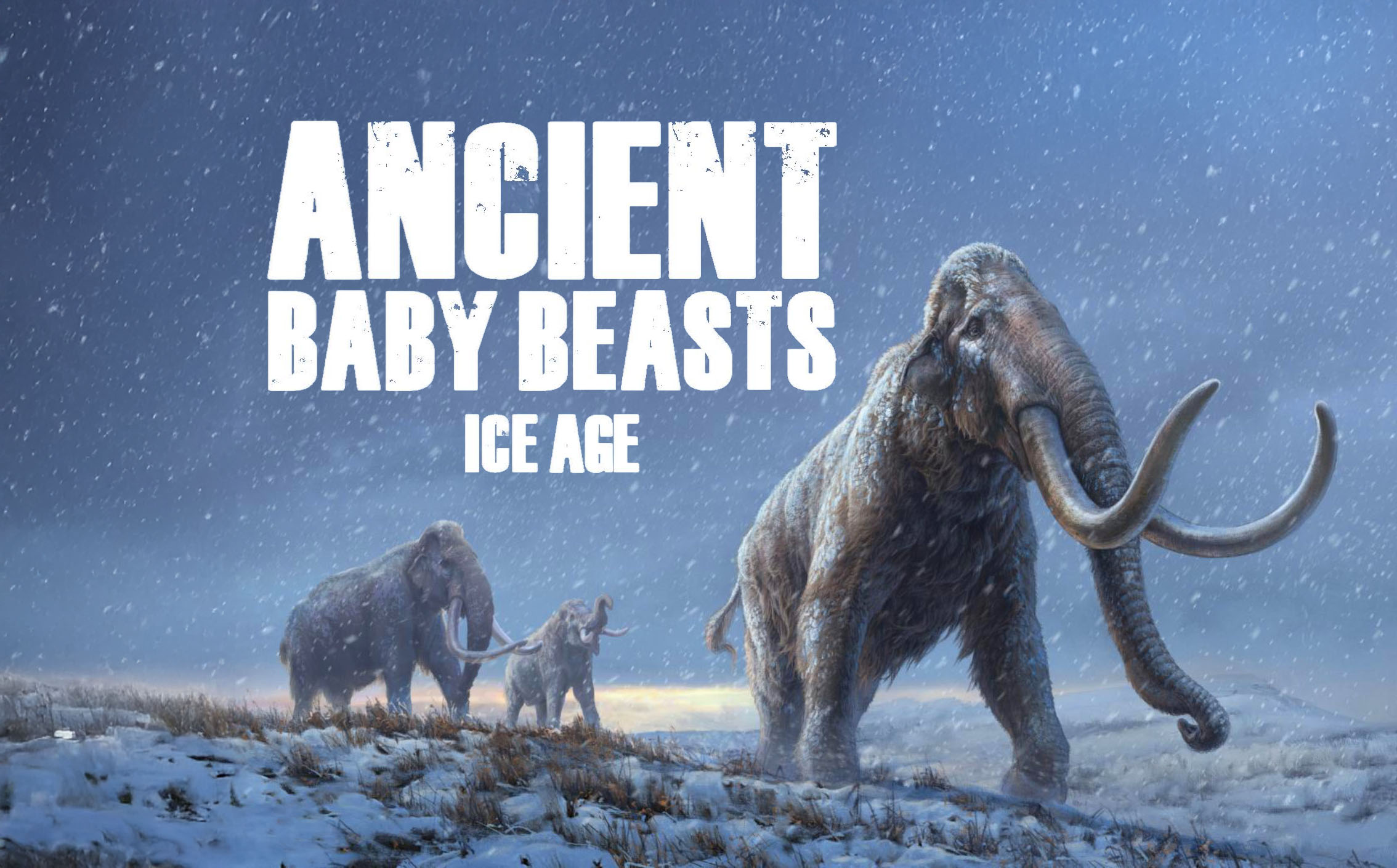
As ancient baby animals emerge from the ice around the world, they offer an unprecedented window into growth, survival, and extinction. Ancient Baby Beasts: Ice Age reconstructs the lives of prehistoric young, revealing how vulnerability, adaptation, and early development shaped the fate of the animals that emerged after the dinosaurs.
Some 57,000 years ago, a wolf pup lay curled inside her den in what is now the Yukon, waiting for her mother’s return. In an instant, the den collapsed, sealing her fate and preserving her in the frozen ground for millennia. Discovered by a miner on the traditional lands of the Tr’ondëk Hwëch’in and later named Zhùr, this remarkably intact ice mummy offers an extraordinary window into a world long vanished.
Ancient Baby Beasts: Ice Age follows the scientific journey sparked by discoveries like Zhùr, as melting permafrost reveals an unprecedented record of prehistoric young such as wolf pups, baby mammoths, ancient cats, and even the earliest mammals to emerge after the age of dinosaurs. For scientists, these rare finds are more than fossils; they are intimate records of growth, survival, and vulnerability, preserved in astonishing detail.
Guided by leading researchers, including Yukon paleontologist Grant Zazula, the film travels from the fossil-rich landscapes of the Canadian North to laboratories where cutting-edge technology unlocks the chemical and biological secrets held within these tiny bodies. From the tooth chemistry of woolly mammoths revealing years of maternal dependence, to the preserved fur of a scimitar-toothed cat cub, each discovery reshapes our understanding of how these animals lived, grew, and adapted to a harsh and changing world.
Blending present-day investigation with vivid reconstructions of the Pleistocene, the film brings these ancient lives back into focus. Drawing on both scientific data and the perspectives of Indigenous communities connected to these lands, it reveals not only how these animals may have lived, but how fragile their early lives truly were.
By looking to modern relatives like wolves, lions, and elephants we can begin to bridge the gap between past and present, uncovering patterns of development and survival that echo across time. Together, these stories form a powerful narrative about resilience, adaptation, and the delicate balance between survival and extinction.
As the tundra continues to thaw, it is revealing more than a record of loss. It is uncovering a hidden archive of beginnings where even the mightiest Ice Age giants started small, dependent, and at risk. In these ancient baby beasts, we may find the answers to one of the biggest questions of all: why some species endured, while others disappeared forever.